
Understanding Fleming County Releases
A Fleming County arrest does not point to a permanent jail inside the county. The county administrative structure assigns a Jailer/Transport Officer to move prisoners to and from designated detention centers. Mason County Detention Center is the clearest verified regional placement because its official bond instructions specifically address people arrested in Fleming County. A past Rowan County housing agreement also shows that the receiving facility can change. It does not establish Rowan as the present jail for every booking.
“Released” describes a custody event, but not always a return to the community. A person may leave on bond, recognizance, time served, sentence completion, parole, probation, or a court order. A transfer to another jail, Kentucky Department of Corrections custody, federal custody, or a detaining authority also removes the person from the first roster. The disposition and receiving-authority fields matter more than a missing name.
The agency trail follows the case. MCDC maintains its own booking and release material for a person held there. The Fleming court keeps the judicial order and disposition. KYDOC maintains state sentence, incarceration, parole, supervision, and discharge information after a person enters its jurisdiction. Federal and immigration agencies use separate locators. A county arrest does not make all later records county-jail records.
Release status should also be separated from case outcome. A person may be released on bond while charges remain pending, or released to probation after a conviction. A dismissal can occur before or after a short period of custody. Sentence completion ends the custodial term at issue, but another warrant or detainer can create a new handoff. The jail entry describes its event; the court file explains the judicial basis; another agency may document what followed.
The research found no active state prison, federal prison, or ICE contract facility inside Fleming County. That absence matters because a directory result can attach a familiar county name to a facility that does not exist. Use the official facility name and address recorded for the person. For local detention, confirm the designated regional jail. For state custody, identify the KYDOC institution. Federal and immigration custody must be traced through their own agencies.
MCDC's public site links to JailTracker for current inmates and to InmateSales for visitation and communications. InmateSales is not a Fleming release-search tool. The Fleming Sheriff's verified Facebook page may carry selected agency notices, but it is not a complete or chronological release database. A social post should never replace the source booking, court, or release record.
Ways Fleming County Custody Ends
The correct next search depends on the legal event recorded by the jail or court. These outcomes should not be treated as interchangeable.
| Release type | Meaning | Where to verify |
|---|---|---|
| Bond or recognizance | The person leaves pending the case under court terms. | Fleming court order, receipt, and jail release entry |
| Time served or sentence complete | The custody term has been satisfied. | Judgment, jail record, or KYDOC discharge |
| Probation or parole | Custody ends while supervision continues. | KOOL, judgment, District 15, or Parole Board |
| Dismissal or acquittal | The affected case ends without conviction. | Fleming Circuit Court Clerk file |
| Transfer or detainer | The first facility hands custody to another authority. | Receiving authority and transfer disposition |
Note: “Bonded out” describes pretrial release and does not mean the charge was dismissed or the sentence was completed.
Fields in a Fleming Release Record
A useful record ties the custody exit to the correct person and booking. No single online Fleming page displays every field. Ask the actual custodian for an existing release log, jail record, or discharge document and describe the date range precisely.
| Field | What it shows |
|---|---|
| Name and identifying number | Connects the event to a booking, jail record, or KYDOC number. |
| Booking and arrest dates | Separates this custody episode from earlier cases. |
| Releasing facility | Identifies which jail or institution made the entry. |
| Release date and time | Records when that facility ended custody. |
| Release type or reason | May distinguish bond, time served, court order, parole, or completion. |
| Receiving authority | Shows whether the exit was a transfer or detainer handoff. |
| Court and charge reference | Links the jail event to the durable Fleming case. |
| Supervision status | Indicates whether parole or probation follows. |
A roster screenshot is weaker. It may prove current custody at one moment, but it usually cannot explain why the record later vanished.
The most important distinction is between release from a particular facility and release from all legal custody. If MCDC records an exit to KYDOC, the Mason booking has ended while confinement continues. If the jail records a detainer handoff, the person has left MCDC but may remain confined elsewhere. If the record says bond or recognizance, the person may be in the community while the Fleming criminal case continues. Read the full disposition before describing the outcome.
Charges and bond data can help identify the booking, but they do not prove the final disposition. Initial allegations can change, and a bond amount can be modified or satisfied through a court-approved form. A release record should be read beside the Fleming case when the reason depends on a judge's order. Likewise, an old booking photo or arrest report says nothing by itself about whether the person is still held today.
For state prisoners, the record vocabulary changes. KYDOC may show sentence dates, institution, custody or supervision status, projected release, parole eligibility, or discharge information. The department's Daily Releases material documents date-specific actual events. These state records should not be rewritten as if MCDC produced them, even when the criminal case began in Fleming County.
Request a Fleming Release Record
Send the request to the office that keeps the record. For a person booked at Mason County Detention Center, start with MCDC, not a generic “Fleming County Jail.” A KYDOC sentence follows the department's open-records route. Court orders and dispositions belong with the Fleming Circuit Court Clerk.
- Confirm the holding facility through the booking record, Fleming dispatch, court file, or VINE.
- Give the full name, known identifying details, booking date, and exact release interval.
- Ask for the existing release log, including date, time, reason, and receiving authority.
- Request the booking photograph separately if it is also needed.
- Ask the custodian to identify any copying cost before production. No verified MCDC release-record fee was found.
- For KYDOC material, use its open-records form or email and identify the precise document.
702 US Highway 68, Maysville, KY 41056
606-564-3621
Kentucky DOC says its open-records office follows a five-day agency response rule and may charge its stated copy or storage costs. The jail's own retention and production timing must be confirmed with MCDC. A request for a named, existing record is more useful than a broad question about whether the person was ever held.
KYDOC inmate files may contain a Release Clearance, Status Change, or Notice of Discharge. Those are different documents with different purposes. Identify the one that answers the question instead of asking for the entire file. For a local case, request the booking and release entry from the jail and the judgment or docket material from the court. Separating the requests reduces the chance that one office will be asked for a record another office controls.
A clear request can say: “Please provide the existing booking-release record for the named person for the stated dates, including the recorded release date and time, release type, and receiving authority, if those fields exist.” This wording asks for maintained material without demanding that staff perform research or create an explanation. Include a mailing or email address for the response and ask how the office accepts payment if copies carry a cost.
The Fleming Sheriff's Office can help identify local routing but does not automatically possess every MCDC record. Its official office is at 201 Court Square, Flemingsburg, and it publishes a 606-845-4701 office number plus 606-845-2121 dispatch. MCDC is a separate Mason County custodian. Ask the sheriff for records it created, such as an arrest or incident record, and ask the detention center for the booking and release material it maintains.
If the custodian denies or redacts material, the response should identify the legal basis that applies. The Kentucky Attorney General provides the Open Records Act review process described in state guidance. That process concerns access to records, not a decision about whether a person should have been released. Questions about the validity of a bond, sentence, or custody order belong in the court process.
Kentucky Law on Fleming Release Records
Kentucky's Open Records Act, beginning at KRS 61.870, supplies the general inspection framework for public records, agency responses, fees, and exemptions. That right does not make every custody fact public. Juvenile, sealed, expunged, medical, security-sensitive, or otherwise exempt information may be withheld or redacted.
Retention differs from web display. A current roster may remove a name while a booking record, release log, judgment, or KYDOC file remains. A lawful expungement can instead remove covered records. Online absence is not a reliable retention test.
KRS 61.874 addresses copies and fees within the open-records framework. KRS 61.880 governs agency responses. The research did not identify a special public MCDC release-record form, fixed online fee, or promised turnaround, so those details must be obtained from the custodian. A requester should not claim a right to an agency-created report if the requested compilation does not already exist. Ask for the existing log, entry, or document in the date range.
Kentucky law also affects booking-photo publication. KRS 61.8746 targets a defined commercial practice in which an operator publishes a booking photograph and charges to remove it. The statute does not guarantee that every photo stays online, nor does it replace the Open Records Act's exemptions or the court expungement process. For an official photo, ask the jail or arresting agency that maintains it rather than relying on a commercial copy.
Automatic expungement is not universal. The court guide limits it to qualifying results and dates, while other eligible cases may require an application, certification, waiting period, or court order. The current court file is the right source for whether an order was entered in a particular case. A records clerk may also need time for an expungement order to reach each affected agency system.
Fleming Bond Release at Mason
MCDC's official bond instructions give a Fleming-specific route. During the stated business-hours process, the bond is handled at the Fleming courthouse and the receipt is then taken to Mason County Detention Center before release. Mason's clerk does not process the other county's bond. The instructions distinguish cash, property, special or responsible-adult, and own-recognizance bonds.
This sequence explains why court payment and physical exit may carry separate timestamps. Confirm both the Fleming order and the MCDC release entry. Never send money based only on an unsolicited call or message.
Property After a Mason Release
MCDC's property guidance says excess cell property may go into a property bag or be collected by family. It does not publish a standard release exit, family waiting area, or property handoff procedure for Fleming County released inmates.
Call MCDC at 606-564-3621 before traveling. Ask what identification is needed, whether authorization is required, where property is held, and whether it followed a transfer. Those questions avoid treating a limited cell-property rule as a complete release process.
Fleming Court Records Outlast Rosters
Physical custody may occur in Mason County, but the durable criminal case remains at the Fleming Judicial Center. The Fleming County Court of Justice page provides the clerk route, calendars, and court contacts. Its file may show the bond order, dismissal, sentence, probation order, or final disposition long after a live jail record disappears.
KYeCourts CourtNet is account-based rather than an unrestricted anonymous docket. When it does not answer the question, identify the case number if possible and request the trial-court record from the clerk.
Expungement Can Remove Fleming Records
The Kentucky Court of Justice expungement guide explains that qualifying nontraffic cases dismissed with prejudice or ending in acquittal on or after July 15, 2020 are automatically expunged after 30 days. The order can reach the court, jail, and arresting agency.
A missing official record can therefore reflect lawful expungement. It does not prove that no arrest, custody event, or release once occurred. Respect the current official record and use the court process for eligibility or certification questions.
Search for a Released Fleming Inmate
Begin with jurisdiction, not a broad name search. A Fleming arrest held at MCDC follows a different record path from a state prisoner, federal prisoner, or person under immigration authority.
- Check the Mason JailTracker roster only for current custody.
- If absent, call MCDC and ask whether its record shows release, transfer, or another disposition.
- If Mason has no booking, contact Fleming dispatch to identify the designated receiving jail.
- Use Kentucky VINE for a matching local or KYDOC event.
- Search KOOL for a state sentence, release or discharge status, and supervision.
- Check the Fleming court record for the controlling order.
- Use BOP or ICE tools only when federal or immigration custody applies.
- Request the source release record when online tools are incomplete.
Use identifiers carefully when names repeat. A date of birth, booking number, DOC number, case number, and facility can separate two similar records. Do not assume that a KOOL result belongs to the same person merely because the name matches a Fleming arrest. Compare the offense, location, physical description when available, and the timeline. If the identifiers conflict, ask the source office to confirm its own record rather than merging the records.
Confirmation works best in layers. First determine that the person was held by a named facility. Next obtain the facility's release or transfer disposition. Then compare that event with the court order, KYDOC status, or receiving authority. A VINE notice or roster change can prompt the check, but the originating jail, corrections department, or court record supplies the durable proof.
Start with the date as well as the name. If the question concerns a Fleming arrest from one week, use that week in the MCDC or other jail request. If it concerns a state sentence, use the DOC number and sentence case. If it concerns a federal prosecution, identify the BOP record and federal court rather than searching every Kentucky county portal. Narrow facts make a cross-system search more accurate.
Keep a short search log. Note the exact roster, date and time checked, identifiers used, office called, and response received. Record whether the event was described as release, transfer, discharge, or supervision. This prevents a later status update from being confused with the first result and makes a focused records request easier. Do not publish private identifiers merely because they helped confirm the match.
When a person is still on the Mason roster, the roster answers present custody only. It may show a booking image, charges, and other booking data, but not a future release promise. Bond information can change after court action. Call the jail or examine the current Fleming court order before relying on an earlier roster entry. Never infer the precise release hour from a scheduled hearing or projected date.
Kentucky Offender Search for Releases
Kentucky Online Offender Lookup, or KOOL, covers KYDOC offenders and supervision records. It is not a complete index of every local Fleming booking. Search broadly, compare identifiers, and open the details. KYDOC advises that public data updates daily and should be verified.
| KOOL field | How it helps |
|---|---|
| Name and aliases | Finds records when spelling or names differ. |
| DOC number | Provides the strongest corrections-file match. |
| Status | Distinguishes incarceration, supervision, release, or discharge wording. |
| Current location | Shows the institution or supervision unit. |
| Projected Release | Shows an estimate, not a completed event. |
| Sentence and supervision | Separates parole eligibility, expiration, and active supervision. |
For an actual state release, compare KOOL with the KYDOC Daily Releases archive. Historical reports identify release type, institution, DOC number, name, and sentence data. A projected date or parole hearing is not completed release.
KOOL's advanced search includes a Projected Release Date range. That field is useful for locating a state record, but it is calculated from sentence and corrections data and can change. Credits, discipline, amended judgments, added sentences, detainers, parole action, and other record changes affect the practical date. The actual release should appear through the later status, the Daily Releases material, or a KYDOC record.
A Fleming detainee can also be a state felon housed in a county jail. That does not turn the MCDC current roster into the KYDOC discharge record. Check both systems when the court or jail indicates state jurisdiction. The local jail answers when the person physically left Mason, while KYDOC answers state sentence and discharge questions.
KYDOC's Daily Releases archive is date-based rather than a Fleming-only feed. A report can list the releasing facility, identifying number, release type, and other fields for state offenders released that day. Search the relevant dates and compare the DOC number. A person released from a state institution may have a Fleming case history, but the releasing agency is still KYDOC.
Projected release and minimum expiration are not synonyms for parole eligibility. Kentucky's sentence-credit statute, KRS 197.045, includes several forms of credit with eligibility and forfeiture rules. KRS 439.3401 applies an 85-percent limitation to defined violent-offender categories, not to all Kentucky inmates. Individual calculations require the judgment, offense date, current statute, credits, discipline, and holds.
Fleming Recent Release Lookup Limits
No official 24-hour, 72-hour, or other recent-release feed was verified for Fleming County or MCDC. Mason's JailTracker is a current roster. It publishes no verified release-feed window, update cadence, disposition fields, or post-release retention rule.
For a same-day answer, check current custody, call the actual jail, review VINE, examine the Fleming court order, and request the release log for the exact interval. State-prison releases belong in KYDOC Daily Releases. A name list without reason or receiving authority cannot separate bond from transfer, detainer, completion, or another event.
A request for a 24-hour period should give both dates and times, including the time zone if the boundary could be disputed. A three-day request should likewise state its beginning and ending timestamps. Ask for the release reason and destination fields with the names. Weekend and holiday processing, delayed entry, and a receiving facility outside Mason can all make a simple before-and-after roster comparison misleading.
Someone visible yesterday and absent today may have been transferred before the later roster view. A person absent from Mason may also have been placed at another designated jail from the start. This is why the current roster cannot be converted into a release list by comparing screenshots. The method misses short bookings, does not show a disposition, and cannot establish the destination.
For a broader time range, request an existing agency log rather than asking staff to assemble a new “recent releases” page. Specify whether transfers should be included and request any maintained release-type and receiving-authority fields. If the agency has no record responsive to the range, continue with the court, VINE, and corrections paths that match the person's case.
Fleming Supervision After Release
Release may begin probation, parole, postincarceration supervision, or another court condition. Fleming County is served by KYDOC Probation and Parole District 15. Its nearest published satellite is in Maysville, while the district covers ten counties.
Use KOOL for person-level supervision fields, then confirm the office and status with District 15 or the court. A parole eligibility date only schedules consideration. A Board recommendation still requires processing and may be affected by holds. Probation comes from a court order and is not parole.
The Kentucky Parole Board publishes prospective hearing schedules and eligibility lists, not a complete public results database. A listed hearing may occur before the eligibility month and does not prove that parole was granted. If a decision matters, seek the written decision sheet or use the Board's open-records route, then confirm actual release through KYDOC. A deferment, denial, serve-out, or full-board review has a different effect from a release recommendation.
District 15 publishes a Maysville satellite at 101 East Second Street, Suite 105, Maysville, KY 41056, with telephone 606-564-5592. The district page is the proper source for current office routing because staffing and reporting instructions can change. Do not assume a supervision office from the county of arrest alone. The assigned officer and KYDOC record determine the correct contact.
VINE, Federal, and ICE Checks
Kentucky VINELink can receive data from county jails, prisons, and other participating facilities. Search the actual receiving jail and compare identifiers. Kentucky warns that one person may have separate local-jail and DOC VINE records, so both may need registration. Release, transfer, escape, and advance-notice events mean different things, and VINE can lag.
A VINE registration may use phone, email, text, in-app, or TTY options shown in current Kentucky materials. Phone registration uses a four-digit PIN to acknowledge a call. The registration is confidential from the person in custody. VINE is a notification service, not a certified record, so confirm any alert with the jail or KYDOC before treating the event as final.
Search both a local-jail record and a state record when the person moved into KYDOC custody. Kentucky's own VINE guidance notes this duplication. Registering on only the first record can miss a later state event. When an alert says transfer, identify the destination before using the word release. Home incarceration and other supervised placements also carry legal restrictions even though the person may no longer occupy a jail cell.
For ICE, the locator can help find an adult currently in immigration custody, but release details, bond, and removal proceedings belong to immigration authorities and the relevant court. For BOP, a past release date or lack of current BOP custody does not exclude supervision by the United States Probation Office or custody under another sovereign. Keep those records separate from the Fleming criminal case.
The BOP Inmate Locator applies to federal custody. “Released” or “not in BOP custody” does not rule out another authority. The ICE locator applies to immigration detention and may require name, country of birth, and A-number. Neither substitutes for an MCDC or KYDOC record.
The BOP locator screen shows why federal custody needs its own route.
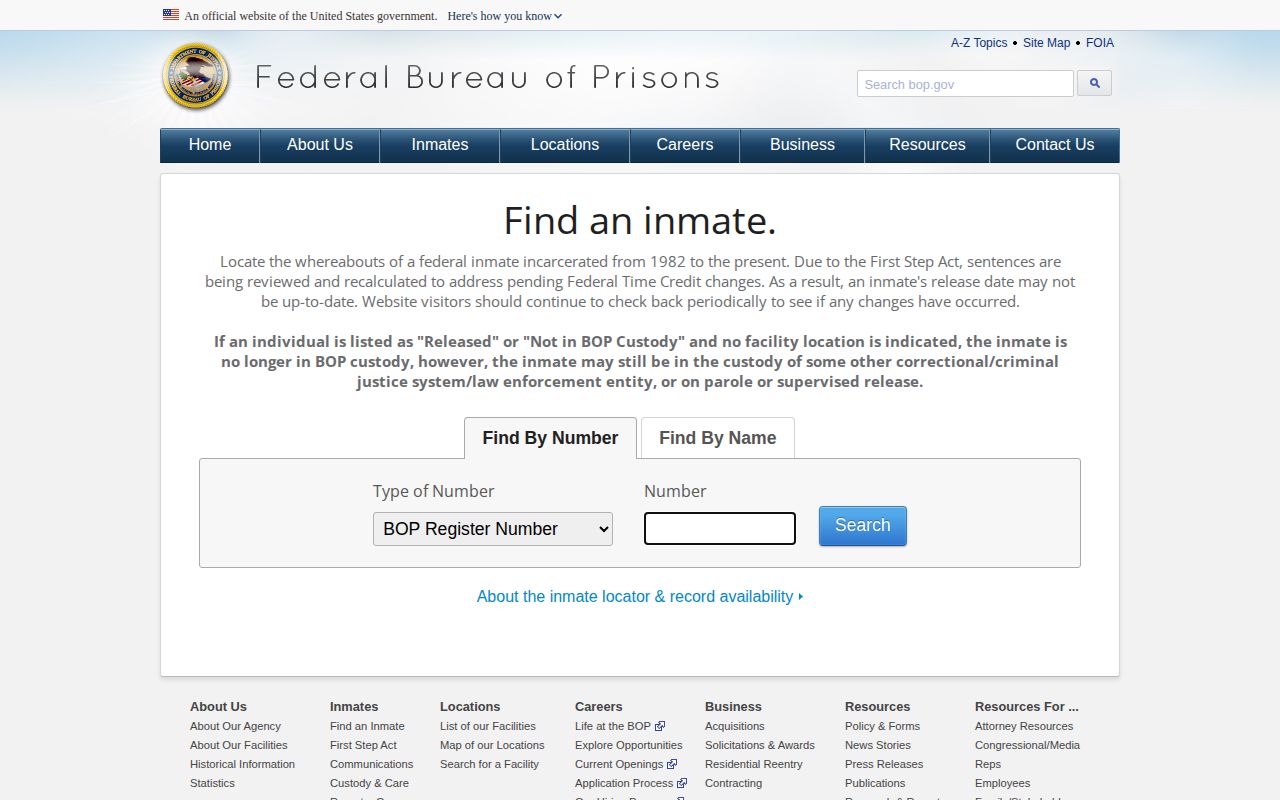
Use a federal result as a lead, then verify transfer, supervision, or detainer details with the responsible authority.
Where Fleming Release Status Appears
The system must match both the custody level and the question. Current location and historical release are different tasks.
The Fleming court case can remain open after community release, and supervision can remain active after incarceration ends. Conversely, a person can leave one roster yet remain in another agency's custody. These overlapping records are normal. They are not necessarily contradictions once the effective dates and agency roles are compared.
A practical reading order is event, authority, then status. First read what happened at the releasing facility. Next identify who ordered or received the move. Last, check the person's current status with the system that now has jurisdiction. Reversing that order can turn a current KOOL or VINE label into an incorrect claim about what happened at MCDC several days earlier.
| System | Best use | Limit |
|---|---|---|
| Mason JailTracker | Current MCDC custody | Not a release archive |
| MCDC release record | Actual exit from Mason | May require a request |
| Fleming court file | Bond, sentence, dismissal, probation | May not prove physical exit time |
| KOOL and Daily Releases | KYDOC status and state releases | Not every county detainee |
| VINELink | Participating local and state notices | Can lag; not documentary proof |
| BOP or ICE | Federal or immigration custody | Does not answer county custody |
Fleming County Detention Routes
Mason County Detention Center is the primary verified regional route. Release may be to the community on bond, recognizance, time served, court order, or completion. Roster removal may instead reflect transfer to KYDOC or another authority.
The other designated detention center route covers bookings placed elsewhere. Start with Fleming dispatch, the court file, VINE, or booking record to identify the jail before requesting its release record. No verified active facility called “Fleming County Jail” should be assumed.
The older Rowan County agreement is useful evidence of a variable contract system, but it expired as a stated fiscal-year arrangement and cannot prove today's destination. The name of the holding jail should come from the individual booking, court transport information, VINE record, or direct confirmation. Once identified, direct the release request to that jail's custodian rather than to Mason by default.
Transportation responsibility also explains why the arresting county and detention county can differ. Fleming's Jailer/Transport Officer role concerns movement to and from designated centers. It does not make the transport officer the keeper of another jail's complete inmate file. The transport record may help identify a destination, while the receiving jail documents admission and release. Both can be relevant without being duplicates.
Verify Fleming Release Payment Demands
In February 2026, the Fleming sheriff warned that scammers were contacting inmate families and seeking Venmo or Cash App payments while promising release or reduced charges. The report said the sheriff and MCDC would not request payment that way.
Independently call the official jail, court, or sheriff number before paying. Do not use a number supplied by the caller. For a legitimate Fleming bond handled through the courthouse process, retain the receipt and confirm that MCDC received the paperwork.
Confirm the Final Fleming Release Event
A complete answer identifies the person, the custody episode, the releasing agency, the event, and the next authority. For a Mason booking, that can mean matching the JailTracker identity to an MCDC release entry and then reading the Fleming court order. For a state sentence, it can mean matching the DOC number in KOOL to a Daily Releases entry and checking whether supervision follows. For a transfer, the receiving facility must confirm the next custody status.
Dates should be read in sequence. The court may enter an order before jail staff complete release processing. VINE may deliver an alert after the source system changes. KOOL may update on its daily cycle. These timing differences do not automatically make one record wrong. Preserve each timestamp and ask the originating office what its field means.
When no online result remains, the records-request route is not a last-resort guess. It is the direct way to obtain the maintained record from the jail, court, corrections department, or federal authority. State the exact person and period, request existing fields, and verify the response against the agency that controlled the event.